
Water Damage Restoration in Valrico, FL
Water damage restoration is the full process of returning a home to a dry, safe, usable condition after water intrusion: extraction, drying, cleaning, and repairs. Extraction is the first and most urgent stage of that process.
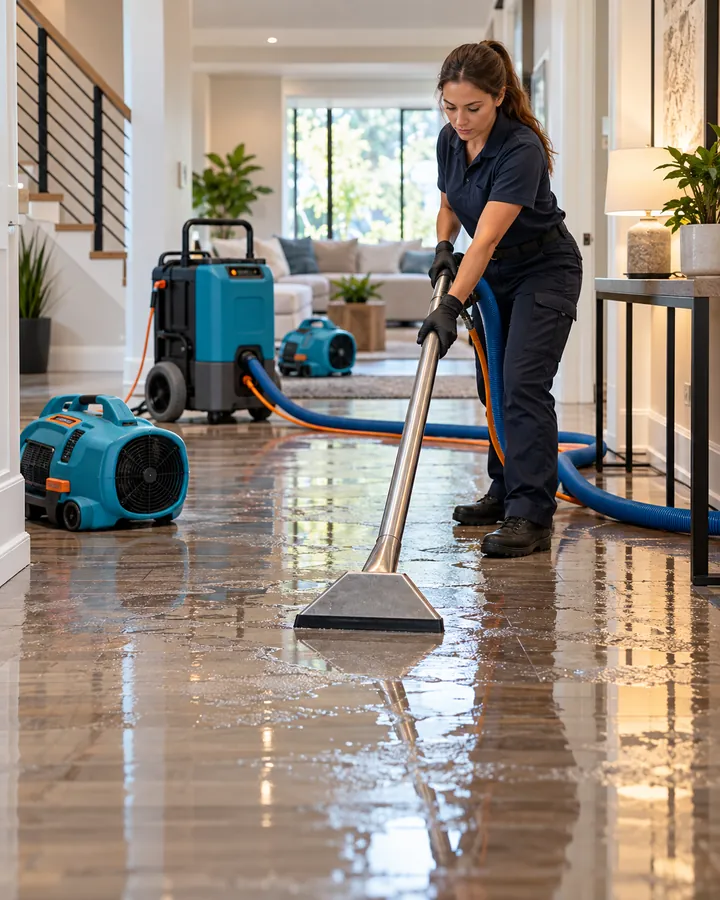
The stages of water damage restoration
- Inspection and safety check: identify the water source, the type of water, and hazards.
- Water extraction: remove standing water and water from carpets and soft materials.
- Removal of unsalvageable materials: wet padding, insulation, or drywall as needed.
- Drying and dehumidification: air movers and dehumidifiers dry the structure, with moisture readings taken to confirm progress.
- Cleaning and sanitizing: surfaces and contents are cleaned, and contaminated areas treated.
- Repairs and reconstruction: replacing flooring, drywall, paint and fixtures that were removed.
Extraction versus restoration
Extraction is the emergency stage that stops the water from causing more harm. Restoration is the wider job. Many people searching for emergency water extraction in Valrico need both: someone to pump and extract now, and a plan to dry and repair afterward. Ask which parts of the job are done in-house and which are subcontracted.
Understanding water categories
Restoration professionals commonly classify water by contamination level, a framework described in the IICRC S500 standard. Category 1 is clean water from a sanitary source, category 2 has some contamination, and category 3 is grossly contaminated, such as sewage or floodwater. The category affects what can be dried in place and what must be removed. For category 3 situations, see sewage backup cleanup.
Why drying matters as much as extraction
Visible water is only part of the problem. Water absorbed into drywall, framing and subflooring keeps releasing moisture into the air. If that moisture is not removed, it can lead to mold growth, odors, warping, and further damage. This is why structural drying and dehumidification is part of a complete job.
Working with your insurance claim
- Report the loss promptly and keep your claim number.
- Take photos and video before cleanup begins.
- Keep receipts for emergency repairs and temporary housing.
- Ask for drying logs and moisture readings, which many insurers request.
- Do not discard damaged items until the adjuster has had a chance to see them, unless they are a health hazard.
Cost considerations
The cost of water damage restoration depends on the extent of the damage, the water category, the materials involved and the time needed to dry the structure. Prices depend on the job, so we do not post fixed prices. Ask for a written scope of work.
Water in your home right now?
Call us now. Calling is free, and availability can vary by time and location.
Call Now for Emergency Water Extraction(813) 768-0768
Frequently Asked Questions
What is the difference between water extraction and water damage restoration?
Extraction removes water from the property. Restoration includes extraction plus drying, cleaning, and repairs.
How long does water damage restoration take?
It depends on the size of the loss. Drying often takes several days, and repairs take additional time.
Can I stay in my home during restoration?
Often yes for small, clean-water losses, but not always for larger or contaminated losses. We can advise.
Does restoration prevent mold?
Fast, thorough drying greatly reduces the chance of mold, but it cannot guarantee that none will develop.
Related services and areas
Related reading: Water Extraction vs. Water Damage Restoration: What's the Difference?